From the Anatomy and Development of the Formula Ford Race Car by Steve Nickless:
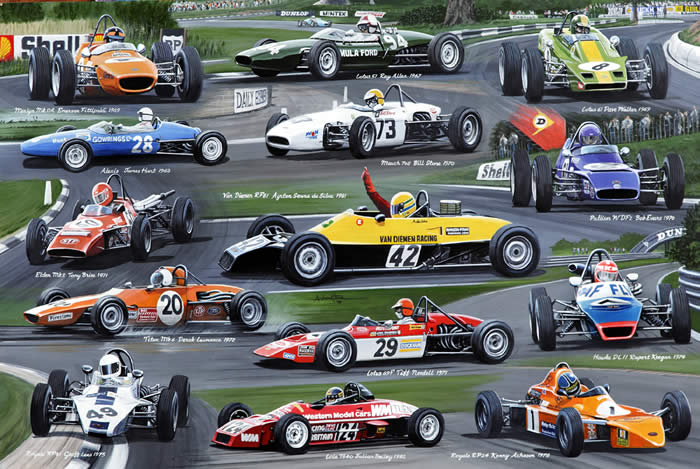
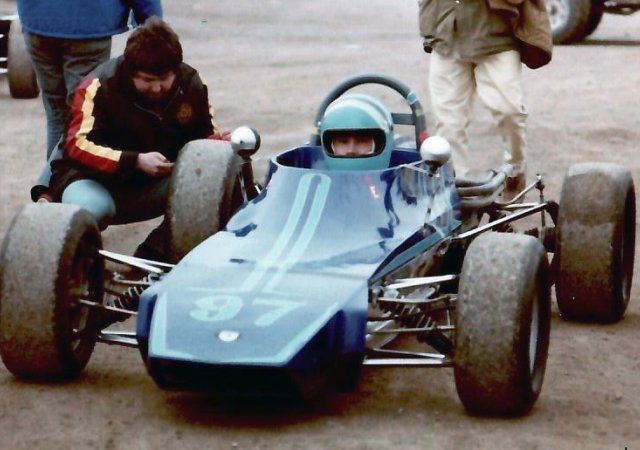
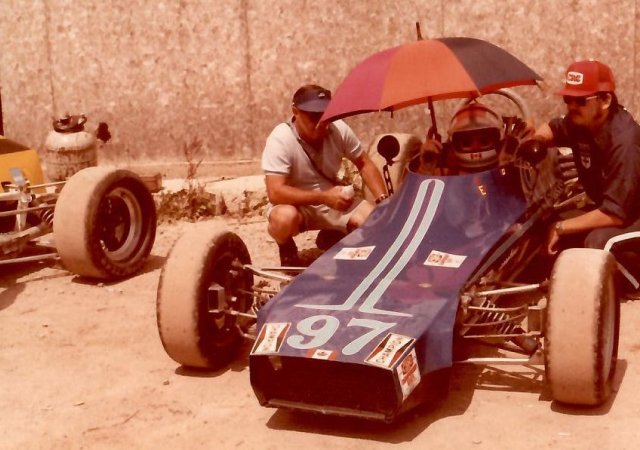
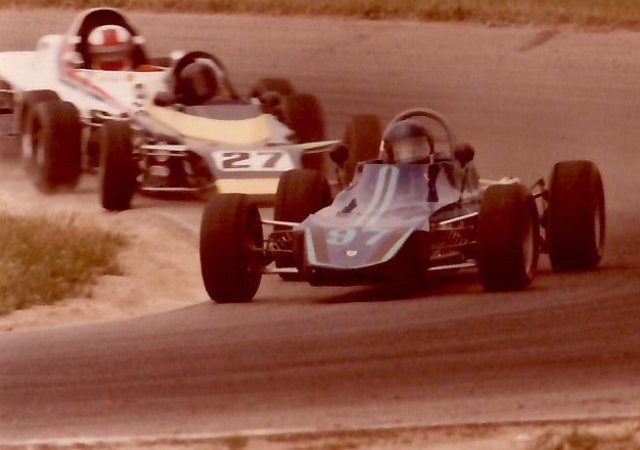
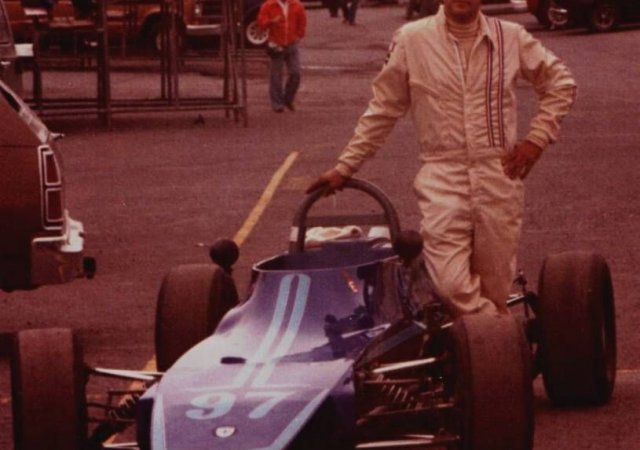
“The first Formula Ford race car mated a Formula 3 chassis to a Ford 1500cc engine. The result was a surprisingly quick and responsive open-wheel single-seater that was also reliable and relatively inexpensive to campaign. Since its beginnings in 1967, Formula Ford proved to be a formula for success. Over the last 60 years, more than 30,000 men and women have raced Formula Ford. Many have run simply for fun. Others have gone on to greater honors, among them Ayrton Senna, Emerson Fittipaldi, Michael Andretti, Nigel Mansell, Arie Luyendyk, Jody Scheckter, Danny Sullivan, Gilles Villeneuve, and many more.”

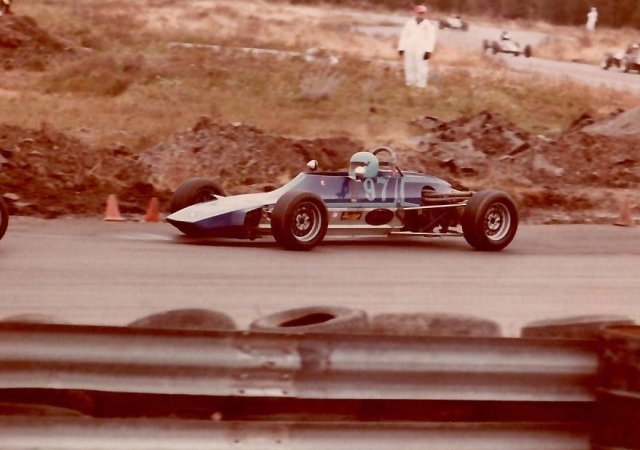
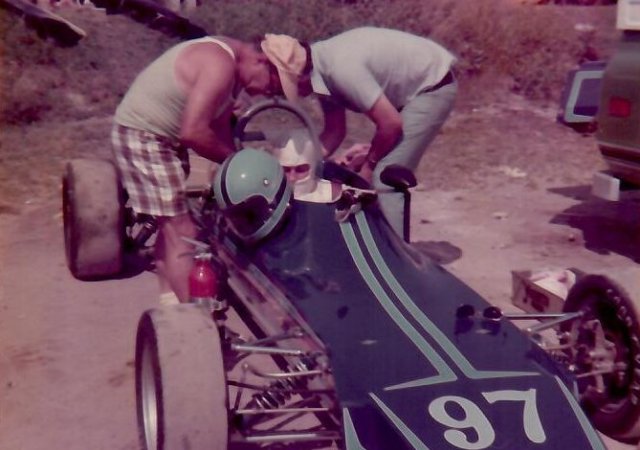
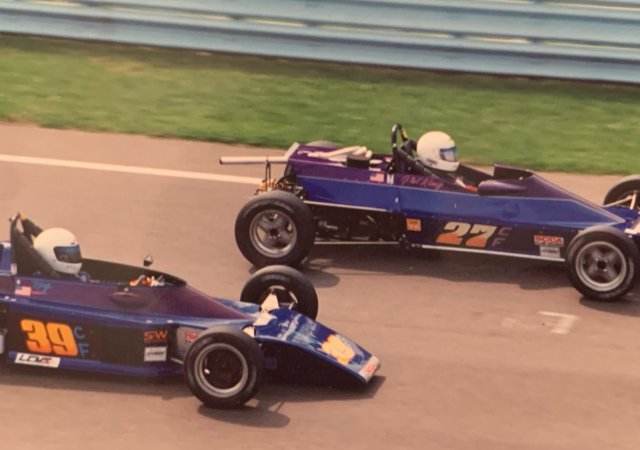
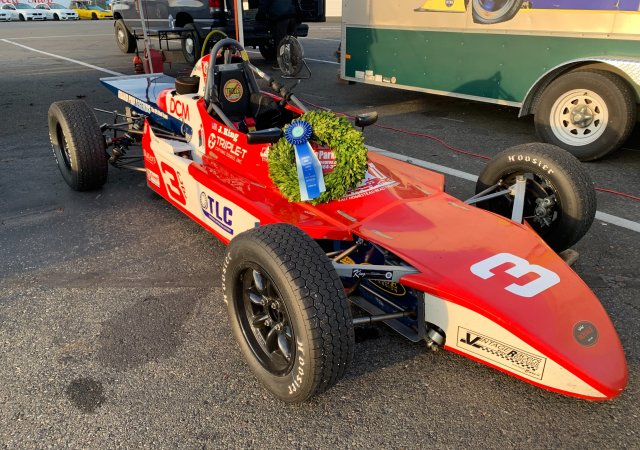
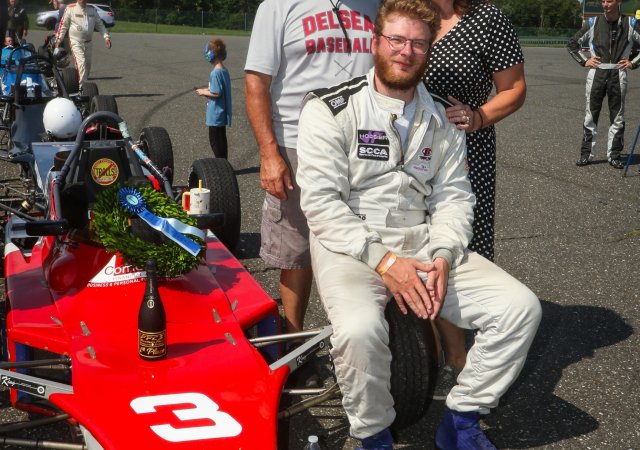
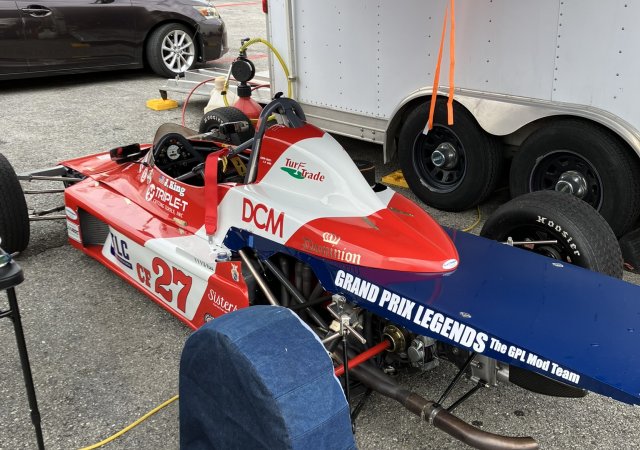
This Formula Ford / Club Ford mod for GPL began as fun and an attempt by some Formula Ford wrinkles to re-live the glory days of the last century. Their biographies are also included for you amusement and a benchmark for the thoroughness of the mod’s testing.
1986 marked the start of Club Ford in the eastern U.S. SCCA scene as part of Mid Atlantic Road Racing Series (MARRS,) with initial races at Summit Point, Nelson Ledges, Mid-Ohio, Pocono, Watkins Glen, and VIR. This is the era we’re modeling with the mod although as you can see the season file covers all parts of the US and Canada and will also be a blast at other tracks worldwide.
The Club Ford mod for Grand Prix Legends (GPL) began its journey back in 2021 when Bob Berman and Doni Yourth thought that these cars would be ideal for on-line racing as well as against the AI.
Richard Cooke’s development and testing of the physics package have resulted in what we believe is an accurate representation of the assorted chassis available that ran in the 1970's and early 1980's. Shaun Collins from sc3dfx built and then with Bob converted and with Phil Woodward delivered superb new 3D models in 7 variants. We’ve been testing them ever since.
Formula Ford grip on US slicks is far superior to the original 67 GPL cars allowing the FF's to cut lap times at, say, Mosport within 10 seconds of the 1967 F1 times and that with all of 25 % the power rattling under the fiberglass.
Users have the ability to alter many parameters such as tire pressures, wheel rates and camber angles and so on. You are free to modify a car to your tastes but don't expect to make big gains over benchmark times. Lap times have been established at many circuits based on published data and considerable track testing to match that data.
Some parameters are not adjustable. Specifically, the differential. You cannot alter the ramp angles or clutch pack and are limited to four CWP options. Formula Fords by regulation are restricted to a 'free diff' and tests to determine what most accurately duplicates a free differential were conducted at length. Gear ratios provided come directly from a Hewland Mk9 manual. Engine power is in the range of 110+ bhp (81+kw). Peak power is developed in the low 6000 rpm range. Users should not look to exceed 6500 rpm in top gear. The engines have good torque and can pull well from 3000 rpm keeping in mind that it is a street engine for mass production as used in Cortinas and yes, even Ford Pintos.
Easy to drive default setups are included to get you going. Optimum air pressures are 21 psi or 145 kpa.
Options for the AI and the player are included gpl/Club Ford Options.
One tip for a fast lap involves “lift-off oversteer.” By lifting the throttle slightly during turn-in, you shift the weight to the front wheels. This creates a natural rotation that points the nose toward the apex. If you fight this movement, you will be slow. Instead, guide the car through the corner with subtle inputs.
The mod includes seven cars:
Run the installer.
Direct it to your gpl when asked.
Create a player in GPL for Formula Ford (or use an existing player), exit GPL
Start GEM+
Click CARSETS button
Move GPLFF (Formula Ford) to the ACTIVE column, click the active carset and a box opens showing the teams and a physics box which should say GPLFF. Click OK.
Select your Formula Ford player. Next to the CARSETS button is a box which probably says "1967 Grand Prix" click the arrow and select "Formula Ford (GPLFF)" for your player.
FFseason is selected as default. FFseason is included but you must have the listed tracks installed or FF season will cause the game to CTD.
gFF championship season is also included but like FFseason you must have the tracks installed to use it until you make your own championship.
Tick any GEM+ options you normally use.
Exit GEM+ and a gplcff.exe will be created.
You can start the exe from your GPL folder or from GEM+.
There is also a folder in the install (Sierra\GPL\repository\Formula Ford) that will have extra files for R/L cars and ai drivers and different race seasons in different regions of the US and Canada as well as paint templates for the car models.
There is tire type changer in the main car folder. It's a graphic change only (Many current Ford Vintage series use treads).
You can race the Formula Ford against the AI or online.
We hope online leagues will pick these up because they are even more fun against real drivers.
Thanks for trying our mod and we hope you enjoy it as much as we have enjoyed making it.
Production
Beta Testing
R.I.P.
As described above, this mod has been in production for many years so we apologise to anyone we have missed in the credit list.
Happy Racing from the GPL Formula Ford Mod Team (12/2026).
This is the first mod in the history of GPL in which the mod creators have driven the cars in real life (as far as we are aware). We hope you enjoy reading their biographies.
I Don’t Want to Work, I Don’t Want to Play, I Want to Race the Car All Day
1978–1980
I bought a helmet, went to drivers school, and started racing Regional and National SCCA events in a TR-7 Showroom class car—which I also commuted to work in. I raced (I’m being generous) at Summit Point against BMW 320i’s and RX-3’s.
Lacking comparable horsepower gave me plenty of time to focus on what the car was doing. It turned out the TR-7 wasn’t just a small block of metal hurtling down the road, but a dynamic piece of machinery with four independent corners.
I also started volunteering with the track’s teaching cadre at Summit Point.
1981
Early in the year I bought my only Formula Ford from Bill Scott Racing (BSR): a Royale RP-24 designed by Rory Byrne, full of clever aero and mechanical ideas I would spend the next decade discovering.
The teaching role expanded as well. I became a regular instructor for BSR’s two-day Competition Course and the five-day “Crash and Bang” course at Summit. I actually got the better end of that deal with the amount of track time I logged over the next four years.
1981–1985
My first open-wheel event was a 30-lap feature in a BSR school-owned Formula Vee. When I asked for race advice, I was told to wait until lap 40 to make my move. Funny - though not as funny as the leaking fuel cell that reminded me of its existence every time I braked into Turns 1 and 5 at Summit.
April 1981
My first Formula Ford race in the Royale, part of the MARRS series, was…eventful. I qualified 28th out of 30 and figured, based on lap times, I might have a shot at 25th.
I never found out.
The car had last been run in a support race at the Canadian Grand Prix in late 1980. That was also the last time anyone had really looked at it. In hindsight, that turned out to be part of the experience.
On lap three, the floor pan detached and launched itself rearward. It didn’t hit anything, but as I went down the main straight, I found myself mesmerized by this shiny piece of metal tumbling high in the air in my mirrors.
I snapped out of it when I noticed the track was now about three inches below my feet and my rookie rear end. I finished the race. Nobody told me to stop.
The season ended with a fairly substantial crash, after which my best friend - longtime racer and engineer Ed Impink - and I rebuilt the Royale from the ground up. That’s where we really learned what race prep, and racing, were all about.
1986–2000
April 1986 marked the start of Club Ford in the eastern U.S. SCCA scene as part of MARRS, with races at Summit Point, Mid-Ohio, Pocono, Watkins Glen, and VIR. This is the era we’re modeling with the mod.
Club Ford was a regional response to the arrival of the Swift DB-1, which instantly made much of the existing Formula Ford field obsolete.
I had a choice: A) stay in Formula Ford, where I was usually somewhere around the top fifteen, or B) move into this new class. I chose B.
For someone who started racing slot cars in 1961 and had an out-of-body experience watching the movie Grand Prix in 1966, the next fifteen years were pure bliss.
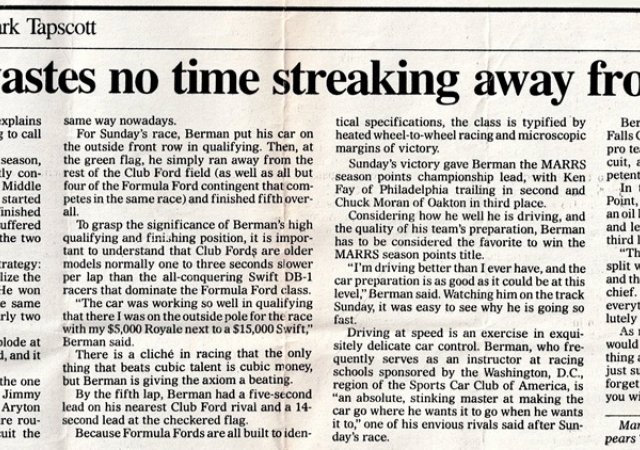
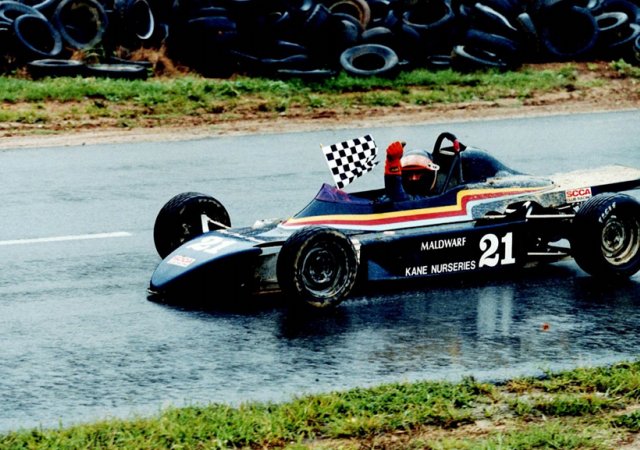
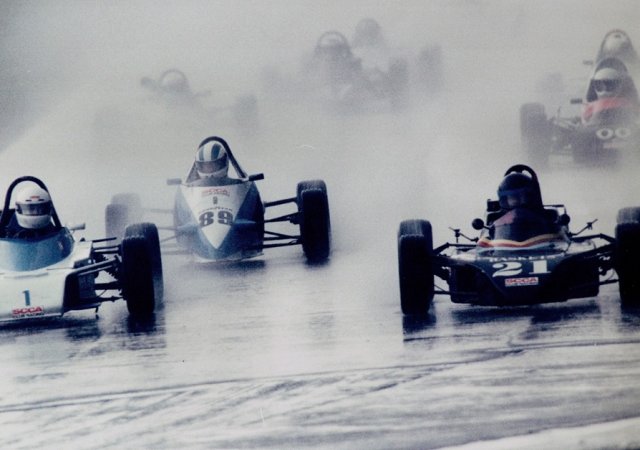
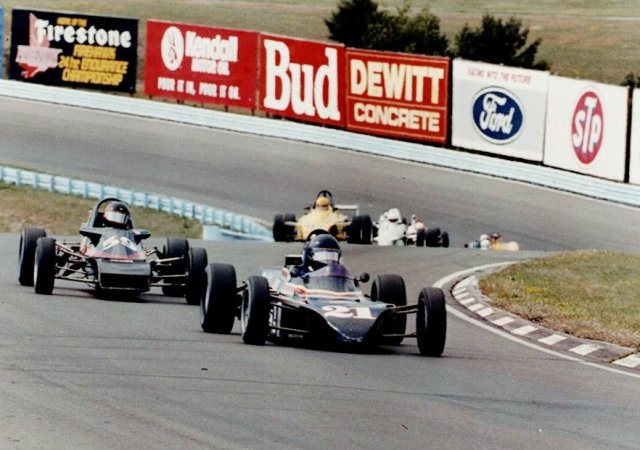
I ran roughly 120 races in a steadily developing RP-24. We improved its aero, weight distribution, and center of mass. Along the way we claimed the Club Ford altitude record at Summit Point, won five Mid-Atlantic Road Racing Championships, and 36 MARRS races -dry and wet - at Summit, Watkins Glen where the car was especially quick (including a lap record that held for a dozen years), and at Pocono in some breath-holding drafting duels where Valvoline Oil presented me a jacket for "Driver of the Meet"
2001–2028
With rules changes coming in to slow the cars and fields shrinking, I decided it was time to step away. After living the dream, it felt like the right moment.
Fortunately, I already had a 1998 Christmas present from my wife - Grand Prix Legends. It seemed reasonable, at that point, to finally buy a computer and see what all the noise was about. John King—Formula Ford racer and GPL legend himself pointed me toward the community and the projects underway. I was all in and haven’t looked back since.
Being part of the group developing Grand Prix Legends has been rewarding at every level. It’s taken me to eras and tracks that dreams are made of—and, in its own way, replaced the cold garages, late nights, and checking the floor pan for missing rivets that I don’t miss quite as much as I thought I would.
I Just Wanted to Race
1956
My introduction to automobiles was not especially promising.
I was hit by one. I spent many weeks in a body cast from my waist to my ankles. You might think that would have encouraged a lifelong interest in something safer.
Apparently not.
1971–1973
I started competing in Solo events with an Austin-Healey Sprite Mk3.
It was a relatively sensible way to go racing. One car, one driver, a clock, and considerably fewer opportunities for someone else to run into you. That would change.
1974–1975
I moved into track racing at Mosport with a 1968 Kelly Formula Vee.
In my first National race there, I finished second by a whisker. By the final race of the 1974 season, things were beginning to come together.
It rained. I loved the rain. I built a lead of roughly 90 seconds and was having one of those races where everything seems easy. Unfortunately, my visor had fogged so badly that I couldn't read my pit board.
That should probably have been a clue. At about half distance I crashed out. So ended what might have been one of my best races. I ran only two races in 1975 before deciding to park the Kelly, sell it, and move to Formula Ford.
1976
My Formula Ford debut came in a Crosslé 30F. I won a Regional race in the FF class, which suggested this might have been a pretty good idea.
Then, in a support race for a combined Makes and Can-Am weekend, I collided with another car and destroyed the Crosslé.
Racing has always had an efficient way of correcting excessive optimism.
1977
We rebuilt the car. That worked out considerably better.
I won another Regional race at Mosport, took FTD against a strong field, won a one-hour enduro at Shannonville, and then won the season finale there to take the regional Formula Ford championship.
For a while at least, the crashes were outnumbered by the wins.
1978
With that behind me, I started testing the waters in AFFA, running events at Nelson Ledges, Quebec City, and Shannonville. The idea was to see whether I was ready to take the next step.
Naturally, I decided I was.
1979
I launched a serious campaign for the AFFA championship. It was a dismal failure.
I crashed in qualifying at West Palm Beach International and scored a DNS. Then I crashed in qualifying at Road Atlanta and scored another DNS. Two events. Two crashes. Zero races.
At the Mosport AFFA race I qualified poorly and couldn't understand why the car was so slow. After the race we discovered a blocked fuel jet.
GRRR...
At Shannonville things finally looked more promising. I started fourth. Then came a mid-race crisis. That was the day I probably should have walked away from motorsports.
I didn't.
1980–1982
Instead, I stopped racing and spent the next three years doing something arguably even less rational: building a Formula Ford.
The car was the Pulsar, essentially our own interpretation of the Crosslé concept, but with a number of features we thought were unique and advantageous.
There was a great deal of testing at Shannonville and a great deal of development. For three years there were no races.But there was plenty of racing.
1983
Early in 1983 I returned in a 1969-vintage Hawke DL2. Eventually we brought out the Pulsar at Mosport.
By then Formula Ford had moved on. The newer cars were becoming extraordinarily slim, and our creation was simply outclassed. I finished fifth. For the National Formula Ford Championship race at Shannonville, though, I qualified the Pulsar sixth.
Then it rained.
Unfortunately, the only rain rubber I had was a set of Firestone intermediates. They weren't rain tires.I was hopeless. I was lapped and finished 16th.
That might have been the end of the story, except late in the year I hooked up again with an old high-school buddy and fellow gearhead. He had gone into stock-car racing while I had stayed with road racing, and we started talking about putting together a professional effort for 1984.
Not Formula Ford. Can-Am or Trans-Am.Now we were talking.
We visited Horst Kroll in Toronto to look at his Lola T300. We visited Rupert Bragg-Smith to look at his Chevron B24. We went to see Peter DeMan and his Trans-Am Corvette.
For somebody who had spent years in Formula Vees and Formula Fords, these were serious racing cars. For a little while, it looked as though there might actually be a way forward.
Then I began hearing some disconcerting stories from extended family members about my old buddy's business dealings.
It turned out my prospective partner was a scammer. Worse, he apparently had even less money than I did.
Game over.
And this time it really was.
I never got my shot at the Lola T300, which I still regret.
American driver B.J. Swanson had moved directly from Formula Ford into F5000 in 1975, and I'd like to think I might have been able to do something similar. Swanson put in some very strong drives and was doing extremely well until the Mid-Ohio round, where he was killed in a start-line accident. So perhaps there is a little hindsight mixed into that regret.
But only a little. I still wish I'd gotten a chance at that Lola.
Born for the Sport
2001–2015
I was born into the sport, getting my introduction to the racing world at six months old at Summit Point in 2001. My siblings and I spent our summers piling into the truck for family trips to Summit Point, Watkins Glen and Lime Rock to watch my Dad race his ’76 Zink Z-10A Formula Ford.
Naturally, I was enamored with the sport and admired the local drivers who raced at a high level. My Dad and a few of the other drivers were my heroes growing up, and I counted down the days until I could be on track myself. Stories of my grandfather John’s racing endeavors, and my grandmother’s time racing a Datsun 240Z, only added to the feeling that racing was in my blood from the jump.
In 2012, my brother Max began racing my father’s Zink and quickly became the man to beat while trying to fill the rather large shoes Dad had left behind. I gained another hero in my brother while watching what he could do on track.
Max and I had grown up racing Gran Turismo on split screen with our Thrustmaster wheels since I was five years old, spending many late nights dueling and pushing each other to get better while Dad watched over our shoulders, criticizing us into becoming the best drivers we could be.
2016–2017
In 2016, I was 15 and finally old enough to get my SCCA Novice Permit.
Unfortunately, I was already too tall to fit into Dad’s Zink. The bottom dash bar restricted my leg movement enough to make driving it unsafe, so Dad rented an ITS-class BMW E30 325i for the March Lion Driver School at New Jersey Motorsports Park’s Lightning circuit.
I had learned to drive a stick in the local high school parking lot just two weeks earlier.
So to say I was thrown into the deep end would be an understatement.
I picked up the basic racing techniques and racecraft rather quickly, thanks in part to the thousands of hours spent on Gran Turismo and GPL preparing for this very moment.
After passing school, I needed two Regional SCCA weekends to get my competition license. Dad and I spent months preparing the family-owned ’72 Datsun 240Z for an August race at NJMP Thunderbolt.
Being an overzealous 15-year-old, I naturally found out what “boiling the brakes” meant in the first session.
The pedal went to the floor at top speed approaching Turn 1.
Somehow, I managed to pitch the car into the corner, slide sideways for a few hundred feet, and stop about ten feet short of the outside wall.
Lesson learned.
Mostly.
My second Regional event was in the only Gen 2 Spec Racer Ford in a field full of Gen 3 SRFs. There were a few seconds per lap between the generations, and I managed not to finish last.
I took that as a win.
2018–2020
Being a poor high-school and then college student, racing regularly wasn't particularly realistic. I did one or two races a year to maintain my license, using money from part-time jobs—with some help from my parents—to rent a Spec Racer Ford or Spec Miata, since they were about the most economical ways to go racing.
I was regularly able to run in the top five in Regional races, with the occasional podium. The best result during this period was a podium in a competitive SRF field at a National event at NJMP Thunderbolt.
By then I'd also bought a computer and an iRacing subscription.
It was considerably cheaper than a race car.
2021
In 2021, I finally got to drive a Formula Ford.
Longtime Club Ford racer Chuck Van Nostrand asked me to run a practice session at an SCCA Regional at NJMP Thunderbolt in his Zink Z-10, which had been modified to fit tall drivers. Chuck wanted me to drive it to determine whether he had a bad setup or was simply losing pace.
Luckily, another Club Ford racer, Joe Marcinski, decided to sit out that session and watch me drive Chuck’s car.
Apparently Joe liked what he saw.
Afterward, he rather nonchalantly asked, “Do you want to drive my car?”
Joe owned a beautifully prepared ’77 Royale RP-24, previously owned by Club Ford legend Bob Berman.
“Absolutely. I’ll take it out for a session.”
At least that's what I thought he meant.
Instead, Joe transferred his race-weekend entry into my name.
This was my first Formula Ford race, something I had dreamed about since I was a little kid but never really thought would happen.
Short story long, I picked up the Royale right away, took the Club Ford track record at NJMP, and won my first-ever Formula Ford race after a heated battle with a Swift.
That worked out pretty well.
2022–2023
Joe’s generosity knew no bounds. He continued to provide the Royale for me to race. As long as I paid the entry fee, he prepped the car, hauled it to the track and worked on it throughout the weekend.
We kept that arrangement for two seasons as Joe gradually stepped away from competitive racing.
We won damn near every race we entered and had a really fun, successful time as a team. In 2023, I took the Club Ford MARRS championship.
At the end of the season, Joe made me an offer I couldn't refuse for the Royale, the trailer and a catalog of spare parts—including Bob’s original tail section.
The car was finally mine.
2024–Present
With the Royale under my ownership, Dad and I began operating as a team and dabbling in vintage racing.
That presented a new challenge. Vintage Formula Ford mandates treaded tires, and the races can have enormous fields—sometimes approaching 50 cars.
My first vintage event was the Jefferson 500 at Summit Point. I finished second in class and third overall in a field of 45 Formula Fords.
Dad and I also kept the car competitive enough to win the MARRS Club Ford championship again, even with a shunt at Watkins Glen thrown into the middle of the season.
In 2025, I backed off the SCCA schedule and concentrated more on vintage racing.
At the Jefferson 500 we finished second overall by a painful 0.081 seconds. Later that season we went to Watkins Glen with the vintage crowd, won one heat by 32 seconds, and took the feature win in a field of 50 cars.
For 2026, the focus shifted entirely to vintage racing. At the Jefferson 500, I again finished second in a photo finish. This time by 0.062 seconds. Apparently 0.081 hadn't been painful enough.
We followed that with a dominant weekend at NJMP, sweeping all five races. To date, I’ve competed in 99 races and won 61 of them. Shamelessly including heat races.
Video of Epic Formula Ford Battle - King vs. King Round 2 @ NJMP Lightning
Max King (Blue #98 Club Ford) & Jake King (Orange #04 Club Ford) battle for the win at NJMP Lightning at the 2023 SCCA Jersey Road Racing Classic.